Residential Proxies Are Better Than VPNs for Accessing Regional Pricing and Web Scraping Because They Use Real Home IPs
· based on the channel Lukas Margerie
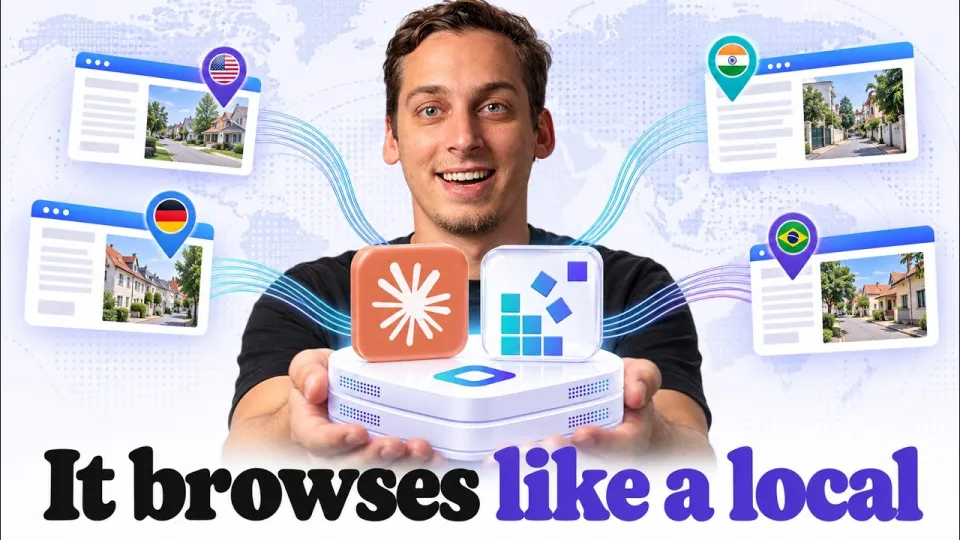
Video: This Claude Code Agent Uses Residential Proxies to Find Hidden Prices
Residential proxies offer a distinct advantage over VPNs when it comes to accessing geo-targeted pricing and conducting sophisticated web scraping. Unlike VPNs, which route all your traffic through a single data center IP often flagged by websites, residential proxies use real IP addresses assigned by home internet service providers. This means the target website perceives each request as coming from an actual local user, enabling access to country-specific content such as hidden or regional prices.
Understanding Residential Proxies Versus VPNs
VPNs and proxies both serve to mask your IP address, but their underlying technologies and effectiveness differ significantly. VPNs route your entire internet connection through one server, usually located in a data center. These data center IPs are well-known and often blacklisted by websites aiming to prevent price discrimination or unauthorized scraping. In contrast, residential proxies assign your requests to IPs from real residential devices connected via home ISPs. This makes them appear as legitimate users from the desired country.
How Residential Proxies Work with Rotating IPs
Residential proxies commonly use rotation to enhance anonymity and avoid detection. Rotating residential proxies assign a fresh exit IP address for every request or session, preventing websites from linking multiple queries to the same source. This approach is critical for large-scale web scraping tasks such as collecting pricing data across multiple countries without triggering anti-bot protections or IP bans.
Practical Application: Using Residential Proxies to Access Regional Pricing
Regional pricing varies widely across digital services. For example, Spotify Premium costs $12.99 per month in the US but only about $1.45 in India. Canva Pro costs $144 per year in some countries and approximately $42 in others. These discrepancies are hidden behind geo-restrictions that show prices based on the detected IP location.
By leveraging residential proxies, you can simulate browsing from real home connections in specific countries like the US, Germany, Brazil, and India. This allows automated agents—such as the Claude Code agent demonstrated by Lukas Margerie—to open pricing pages from these locations and aggregate the results for comprehensive regional price comparisons.
Integrating Residential Proxies with Web Scraping Tools
Combining residential proxies with tools like Playwright and AI agents such as Claude Code enables efficient and scalable scraping of pricing data. The process involves:
- Assigning residential proxy IPs from target countries.
- Using Playwright to automate browser actions that load pricing pages.
- Employing AI (Claude Code) to parse and consolidate pricing information.
This setup avoids manual checks and circumvents VPN-related IP flags, providing reliable data for SaaS companies, marketers, and price analysts interested in geo-targeted pricing or competitive intelligence.
Common Questions About Residential Proxies
Some typical concerns include the cost of residential proxies compared to VPNs, their legality, and how to choose a reliable provider. Residential proxies tend to be more expensive due to the complexity of routing through real ISP connections, but they offer superior access and less risk of blocking. Providers like DataImpulse specialize in residential proxies optimized for web scraping and regional targeting.
Useful Links
- DataImpulse Residential Proxies for Web Scraping and Regional Access
- Claude Code AI Agent
- Playwright Automation Library
Итог
Residential proxies clearly outperform VPNs for tasks requiring access to localized pricing and stealthy web scraping. Their use of real home IP addresses and rotating exit points makes them harder to detect and more effective at bypassing geo-restrictions. Tools like Claude Code combined with DataImpulse residential proxies automate the complex process of gathering accurate pricing data across multiple countries. For anyone interested in regional pricing intelligence or advanced scraping, exploring residential proxies is essential. Visit DataImpulse to get started with residential proxies and leverage their power for your projects. This analysis is based on the detailed work of Lukas Margerie, whose expertise helps clarify this evolving technology.
Key takeaways
- Residential proxies route traffic through real home ISP connections, making them less detectable.
- VPNs typically use data center IPs that websites can easily flag and block.
- Rotating residential proxies provide a fresh IP with every request for anonymity and accuracy.
- Regional pricing on services like Spotify and Canva varies significantly across countries.
- Claude Code combined with residential proxies automates multi-country price scraping.
Source: This Claude Code Agent Uses Residential Proxies to Find Hidden Prices · Markdown version
Questions & answers
What is the main difference between a VPN and a residential proxy?
A VPN routes all your traffic through a single server typically located in a data center, which can be detected and blocked by websites. In contrast, a residential proxy routes each request through IP addresses assigned to real home internet users, making it appear as local traffic and less likely to be flagged.
Why are residential proxies better for scraping regional pricing information?
Residential proxies simulate genuine users from specific countries by using real residential IPs. This allows access to localized content and pricing that VPNs with data center IPs often cannot access because such IPs are commonly blocked or recognized as proxies.
Are residential proxies legal to use for accessing different regional prices?
Using residential proxies is generally legal, but it depends on the terms of service of the websites and local laws. They are commonly used for legitimate purposes such as market research and price comparison, but users should ensure compliance with applicable regulations.
What should I consider when choosing a residential proxy provider?
Key factors include the provider's network size, IP pool diversity, rotation capabilities, geographic coverage, reliability, and pricing. Providers like DataImpulse offer specialized residential proxies optimized for web scraping and regional targeting, ensuring better performance and lower detection risk.